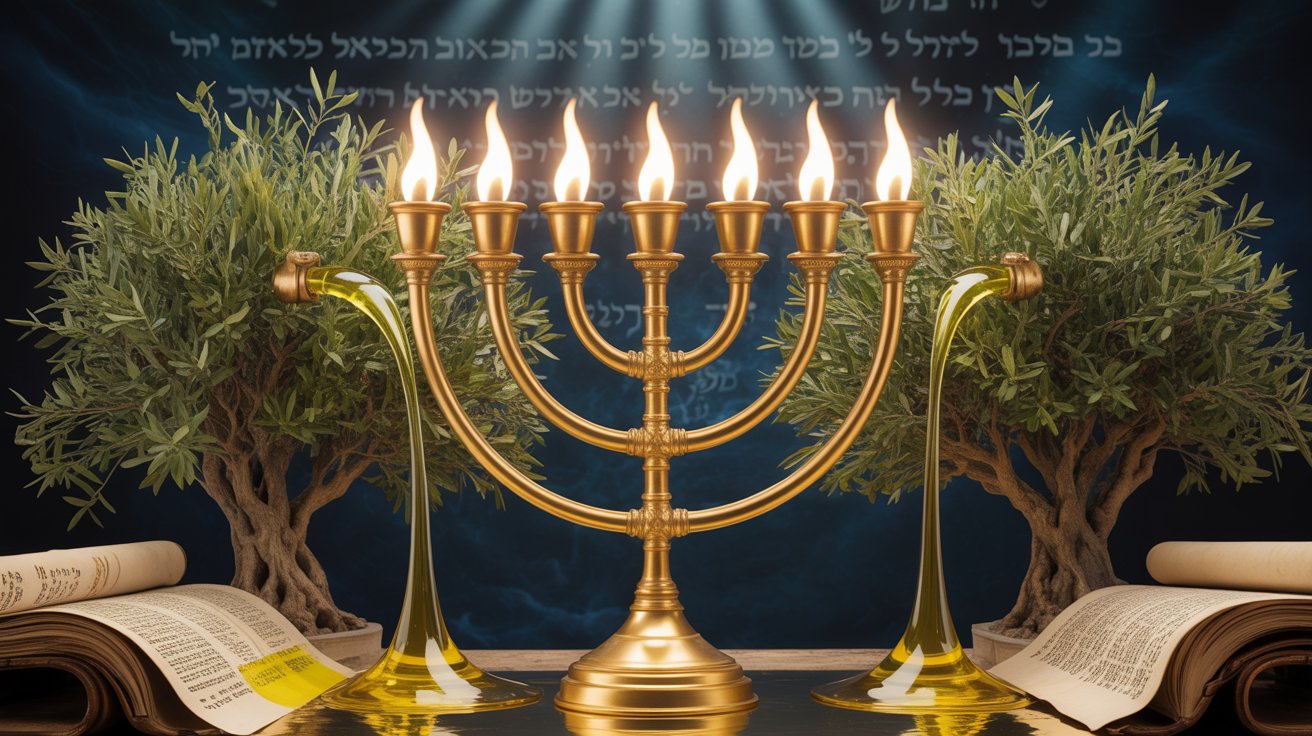
The Two Olive Branches
Two Olive Trees · Two Witnesses · Two Anointed Ones
Exploring Zechariah 4 · Revelation 11 · Romans 11
Examining Four Major Christian Traditions
Dispensationalist
Futurist Framework
Seventh-day Adventist
Historicist Framework
Protestant / Reformed
Idealist Framework
Roman Catholic
Patristic Tradition
“Not by might, nor by power, but by my spirit, saith the LORD of hosts.”
Zechariah 4:6 (KJV)
Eight Sessions of Study
Overview
The prophet Zechariah ministered during a pivotal moment in Israel’s history. Having returned from the Babylonian exile around 538 BC, the Jewish community faced the daunting task of rebuilding the temple. Zechariah received a series of eight night visions designed to encourage the people and their leaders — particularly Zerubbabel the governor and Joshua the high priest. The vision of the lampstand and two olive trees is the fifth and central vision, emphasizing its theological importance: the message that God’s work is accomplished not by human strength but by His Spirit.
Key Points
- 1The golden lampstand (menorah) has a self-replenishing supply of oil flowing continuously from two olive trees through golden pipes — supernaturally sustained by God.
- 2The two olive trees are identified as “the two anointed ones, that stand by the Lord of the whole earth” (4:14) — Zerubbabel (kingly office) and Joshua (priestly office).
- 3The interpretive key is Zechariah 4:6: “Not by might, nor by power, but by my spirit, saith the LORD of hosts.”
- 4Zerubbabel and Joshua together prefigure the Messiah, who uniquely combines the offices of King and Priest (Zechariah 6:12–13; Hebrews 4:14–16).
- 5The Hebrew phrase “sons of oil” (bene ha-yitshar) is unique — signifying a special, direct endowment from God.
Areas of Agreement Across All Traditions
- ✔
All acknowledge the explicit textual link in Revelation 11:4 between the Two Witnesses and the “two olive trees” of Zechariah 4.
- ✔
All recognize the primary historical context: Joshua the high priest and Zerubbabel the governor in post-exilic Jerusalem.
- ✔
All agree that the oil represents the Holy Spirit, empowering God’s chosen instruments for His purposes.
- ✔
All affirm that the witnesses bear a divinely commissioned testimony in a hostile world.
- ✔
All recognize the ultimate vindication of the witnesses — God has the final word.
This study has examined one of the most theologically rich and contested prophetic symbols in Scripture: the Two Olive Branches. The four traditions examined arrive at remarkably different conclusions from the same biblical texts. These differences flow logically from each tradition’s foundational assumptions about how to read prophecy, the nature of the Church, and the structure of God’s redemptive plan.
All Scripture quotations from the King James Version (KJV)